
Apply for Your EU Blue Card
- Our legal team will review your case for Blue Card for free.
- We check your degree, job offer and salary against the Blue Card requirements.
- We prepare your application and follow up with the authority.
- We file a lawsuit if the decision takes too long.
Known From






Your German job starts soon.
Your EU Blue Card should not hold you back.
Salary check
Degree proof
Visa or apply in Germany?
Start date on hold
Where Do You Stand With Your EU Blue Card?
You have a job offer and have not applied yet
We check your degree, contract and salary against the Blue Card rules and prepare a complete application. If the Blue Card does not fit, we tell you before you file.
You already live in Germany on another permit
We check whether you can switch to the Blue Card and prepare your application. If you apply before your current permit expires, it stays valid until the authority decides (§ 81(4) AufenthG).
You are applying from abroad
We check whether you need a visa, prepare your documents for the embassy and follow up on your application.
You applied already and are still waiting
If you have been waiting more than 3 months for your blue card decision, we can take different steps to move your application forward. The right step depends on your situation, such as whether you will lose your job if you don’t get the visa, how long you have been waiting, your professional profile, etc.
We assess your case to determine the right next step and explain it to you in the free case assessment*.
Why Choose Us?
Expert Lawyers
Fair & Transparent
Honest Guidance
Complete Support
How We Help You
We'll handle everything for you.
Visa Application
We'll prepare and file your application.
Meet Your Immigration Lawyer
- Practicing law since 2016
- More than 250 successful court cases
- Offers advice in English, German, and Russian
- Specialised in immigration law
- Supporting expats for more than a decade


How It Works
Free Case
Assessment
We Support Your Application
We File The Lawsuit, If Needed
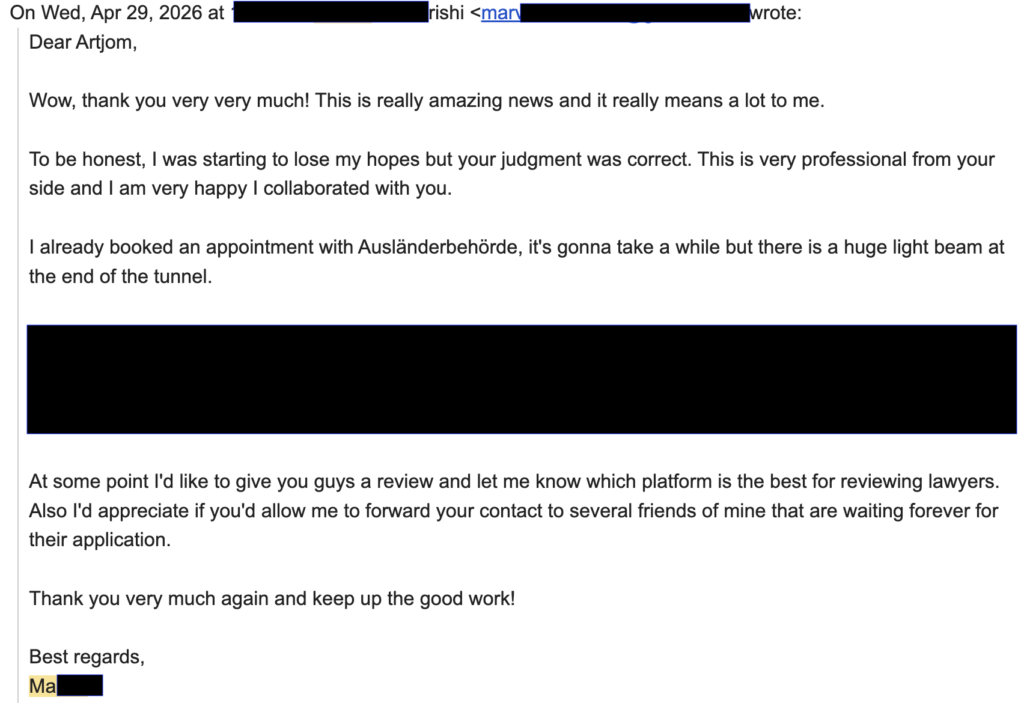
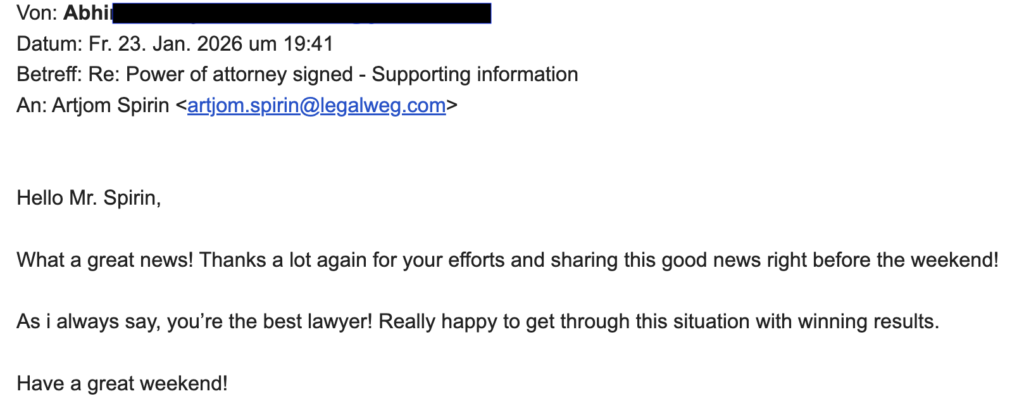
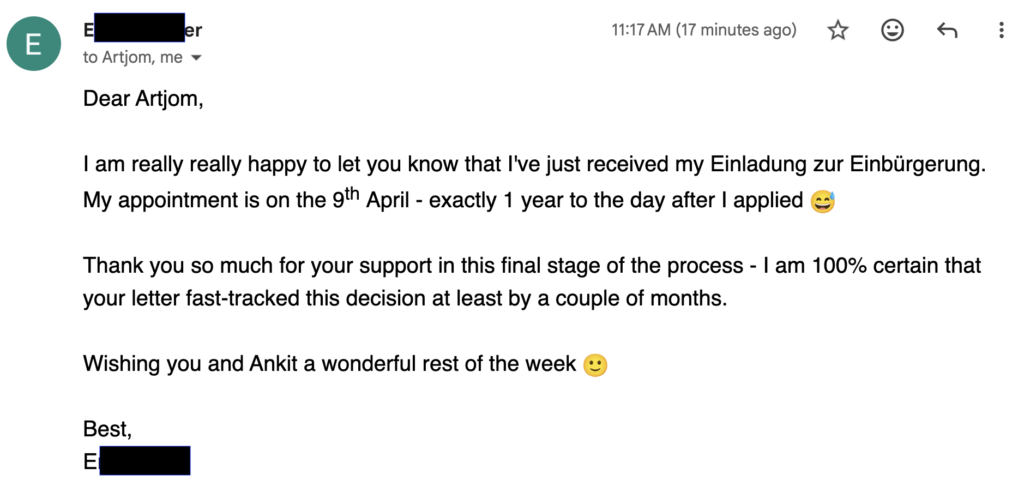
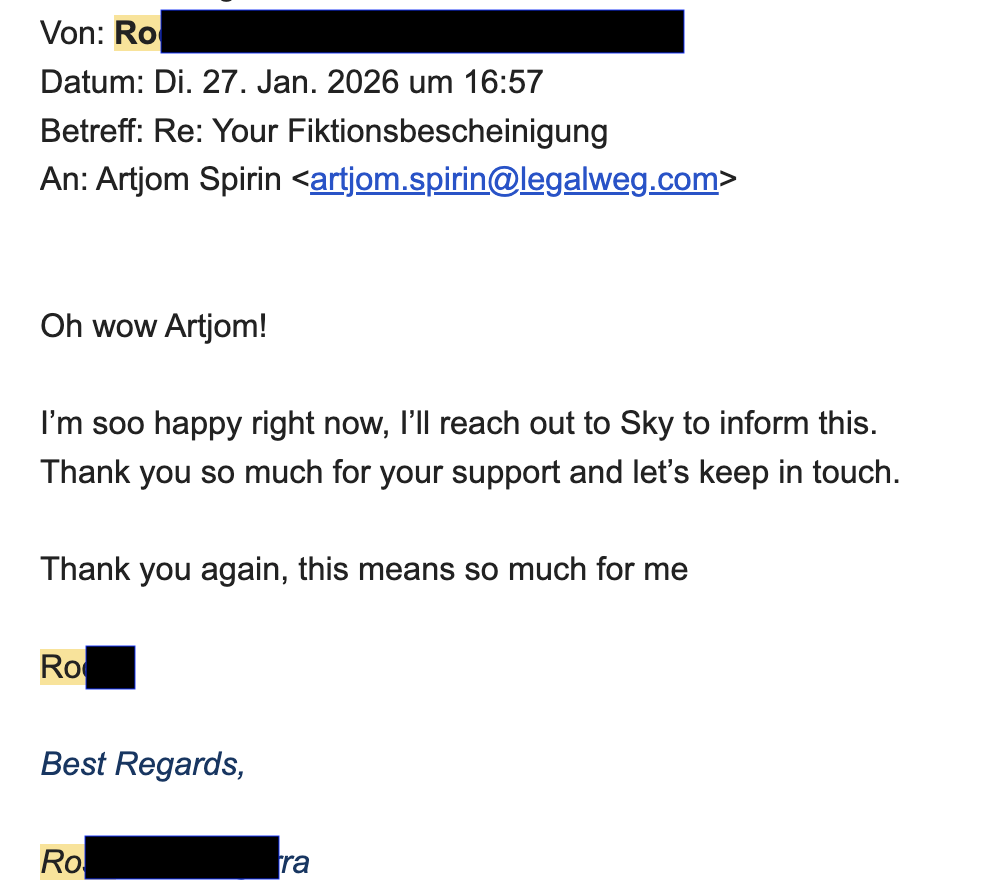
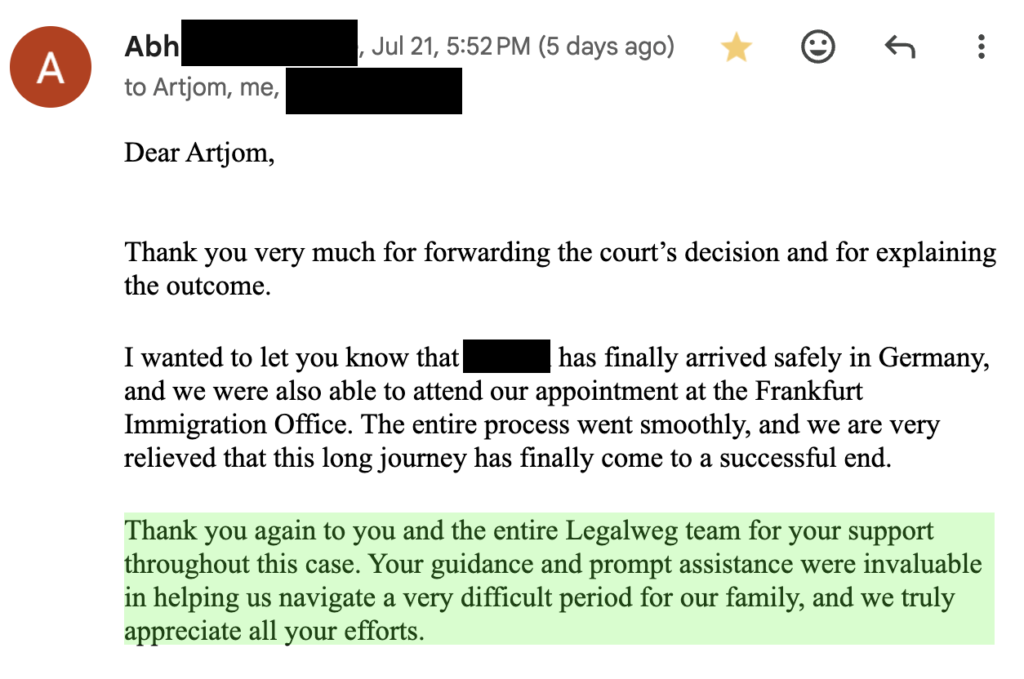
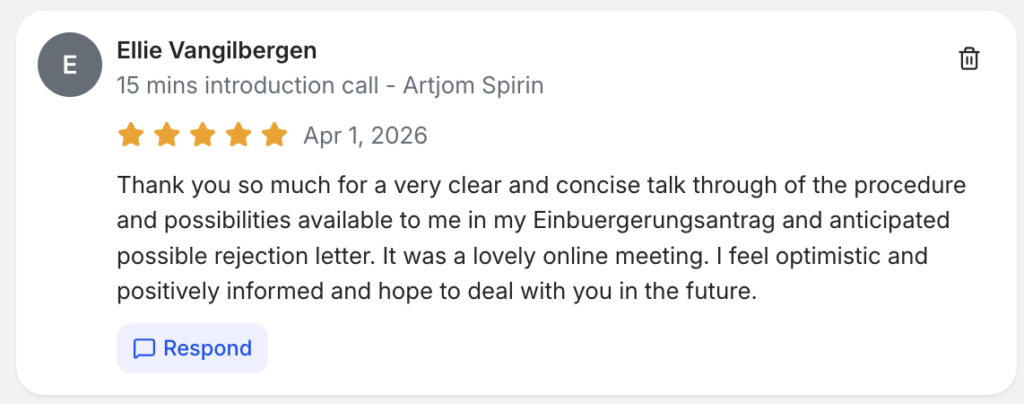
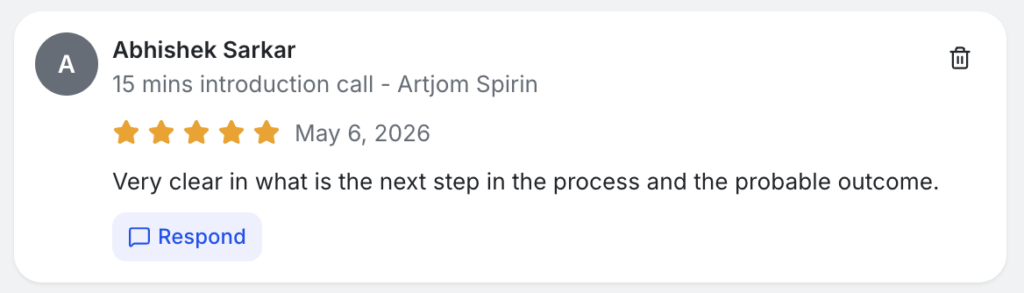
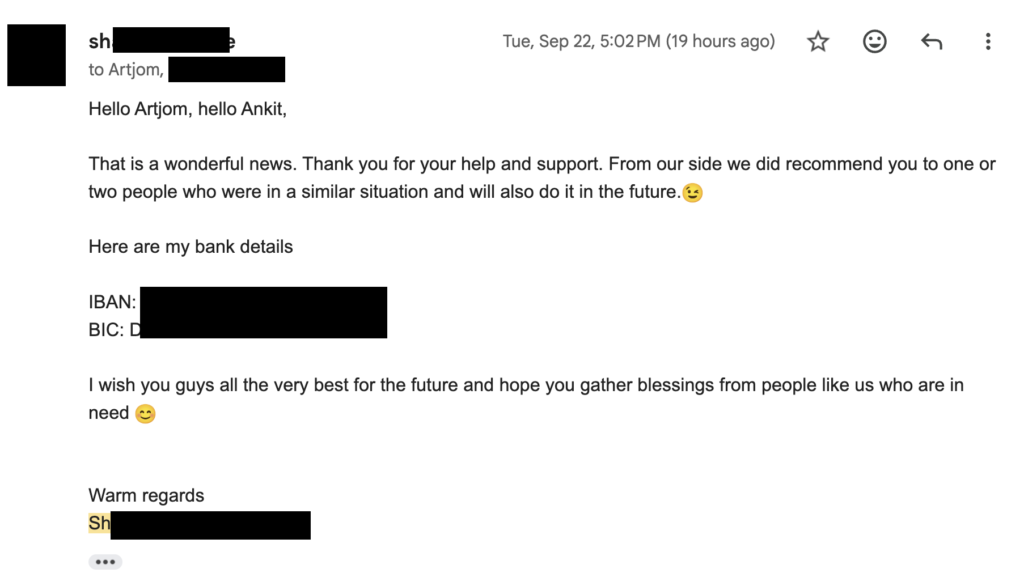
What Our Clients Say
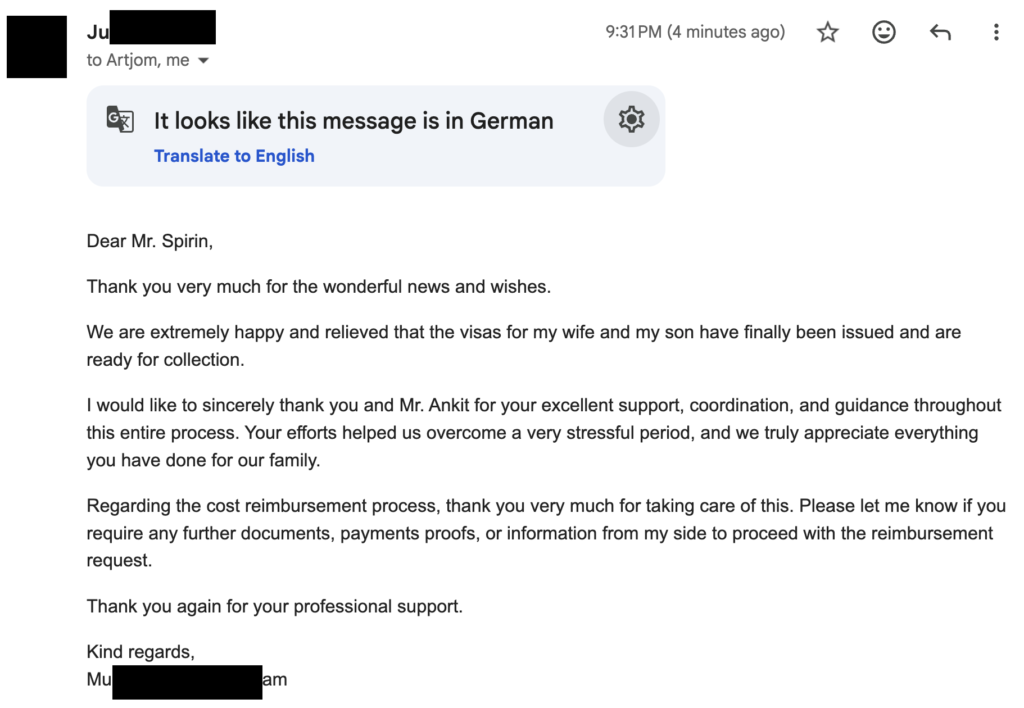
Don't Put Your Future on Hold
EU Blue Card Explained
What is the EU Blue Card in Germany?
The EU Blue Card (Blaue Karte EU) is a residence permit for qualified professionals with a university degree and a qualified job in Germany (§ 18g AufenthG). It differs from the Opportunity Card (Chancenkarte), which lets you look for work, and from the permanent residence permit (Niederlassungserlaubnis), which has no end date.
What the EU Blue Card offers:
- Job flexibility. You do not need the Ausländerbehörde’s permission to change employers. In your first 12 months of employment, the office can suspend a job change for 30 days and reject it if the Blue Card requirements are not met (§ 18g(4) AufenthG).
- A faster route to permanent residence. You can reach a permanent residence permit after 27 months, or 21 months with B1 German. Other skilled workers usually need 3 years.
- Easier family reunification. Your spouse does not need to prove basic German before joining you. The family reunification requirements set out the other conditions.
What are the requirements for an EU Blue Card in Germany?
You need a degree that Germany accepts and a qualified job that pays enough. The main requirements are:
- Degree: a German university degree, a recognized foreign degree, or a foreign degree comparable to a German one. An equal tertiary programme of at least three years also counts.
- Job: a contract or concrete job offer that fits your qualification and runs for at least 6 months.
- Salary: at least €50,700 gross per year in 2026. A lower threshold of €45,934.20 applies to shortage occupations (listed occupation groups) and to a degree obtained no more than three years before you apply, and it needs approval from the Federal Employment Agency.
- Other conditions: a valid passport and no ground for refusal under the general rules (§ 5 AufenthG) and (§ 19f AufenthG).
Salary figures as of Oct 2026. The Federal Ministry of the Interior publishes new figures each year by 31 December (§ 18g(7) AufenthG).
Do you need German language skills for an EU Blue Card?
You do not need German language skills for the EU Blue Card itself, because the law names no German requirement (§ 18g AufenthG). However, if your job is a regulated profession, the licensing body may require German.
German also matters later: B1 German shortens your route to a permanent residence permit from 27 to 21 months.
Where do you apply for an EU Blue Card in Germany?
You apply for an EU Blue Card at the German embassy or at your Ausländerbehörde, depending on your nationality and your current permit. Your situation decides:
- You need a visa to enter Germany. Apply at the German embassy before you travel.
- You already hold a national visa or a residence permit. Apply at your Ausländerbehörde (§ 39 AufenthV).
- You are a national of Australia, Israel, Japan, Canada, South Korea, New Zealand, the UK or the USA. You can enter without a visa and apply within 90 days (§ 41 AufenthV).
- You are another visa-free national. You can apply in Germany only if your right to the Blue Card arose after you entered (§ 39 AufenthV).
Check your nationality before you travel.
How do you apply for an EU Blue Card in Germany?
You apply for an EU Blue Card once you have a job offer and the documents that prove your degree, your salary and your identity. Follow these steps:
- Check that you qualify. Compare your degree, job offer and salary with the requirements above.
- Get your employment contract or a binding job offer. The offer must run for at least 6 months.
- Gather the documents for your case. Offices usually ask for these:
- Your valid passport.
- A current biometric photo.
- Your degree certificate and proof that Germany recognizes it or finds it comparable.
- Your employment contract or binding job offer.
- Proof of your health insurance.
- Proof of your housing.
- The application form and your employer’s declaration on the job.
- Submit your application and pay the fee. The fee for the card is 100 € (as of October 2026). If you apply at an embassy, the national visa costs another 75 € (§ 46(2) AufenthV). Applicants under 18 pay half (§ 50 AufenthV). Turkish nationals pay a lower fee (§ 52a AufenthV).
- Attend your appointment. The office checks your identity and documents and takes your fingerprints for the electronic residence permit card (eAT).
- Receive the decision. After approval, you collect your eAT. If the office rejects, you receive a rejection notice.
Requirements vary by office, and missing documents can delay your application. We can assess your case for free and review your documents so you submit a complete application.
How long does an EU Blue Card take?
An EU Blue Card has no single nationwide processing time. It depends on whether you apply from abroad or inside Germany, on your office, and on whether your documents are complete. If you have waited longer than your office’s stated time, we can assess your case.
Frequently Asked Questions
Can you get an EU Blue Card without a university degree?
Yes, you can sometimes get an EU Blue Card without a university degree. IT managers and IT specialists can qualify without a degree if they meet these conditions:
- Their job falls in ISCO-08 group 133 or 25.
- They have 3 years of experience in such a job in the last 7 years, at a level comparable to a degree.
- They earn at least €45,934.20 a year.
- The Federal Employment Agency approves (§ 18g(2) AufenthG).
Other professions need a degree or an equal tertiary programme of at least three years.
What happens to my current permit while I wait for my EU Blue Card?
While you wait for your EU Blue Card decision, your current permit stays valid if you already live in Germany and applied before it expired.
- The office must also give you a Fiktionsbescheinigung, a certificate that confirms the effect of your application (§ 81(5) AufenthG).
- If you applied after your permit expired, the office may order it to continue to avoid undue hardship.
What is an Untätigkeitsklage?
An Untätigkeitsklage (“action for failure to act”) is a lawsuit you file at the administrative court (Verwaltungsgericht) when an authority sits on your application without deciding it. It doesn’t ask the court to grant you the permit directly — it asks the court to make the authority finally do its job.
In immigration cases, the authority is usually the Ausländerbehörde, but it can also be the Bundesverwaltungsamt (citizenship), a Standesamt, or a German embassy.
When can I file an Untätigkeitsklage?
You can generally file an Untätigkeitsklage once three months have passed since you applied and the authority has not decided, without a good reason for the delay (§ 75 VwGO).
- A shorter wait is possible if special circumstances in your case call for it. § 75 gives no examples, so we can help assess this for you.
- If the office has a good reason for the delay, the court pauses the case until a date it sets.
What can the court order in an Untätigkeitsklage?
In an Untätigkeitsklage, the court can require the authority that handles your EU Blue Card application to decide. That is your Ausländerbehörde if you apply in Germany, or the German embassy if you apply for a visa abroad.
- If the office has a good reason for the delay, the court pauses the case until a date it sets. The case is declared settled if the office decides in that time.
- A win means you get a decision, which can be favorable or not. If your matter is ready for decision, the court can also order the permit itself (§ 113(5) VwGO).
Our lawyers can flag weak cases before you spend money on a lawsuit.
What is the difference between Untätigkeitsklage and einstweiliger Rechtsschutz?
An Untätigkeitsklage is the standard route: it resolves the delay properly, and takes weeks to months.
Einstweiliger Rechtsschutz (provisional injunctive relief) is the emergency route, used when waiting itself will cause you irreversible harm. E.g., you’re about to lose a job offer, your Fiktionsbescheinigung is expiring, a family member is stuck abroad. It’s much faster, but the court has to accept that your situation is genuinely urgent.
The two are not mutually exclusive, and in the right case filing both applies real pressure. Which route fits you is a strategic decision. We explain you what strategy makes sense in your situation in the beginning.
Will filing a lawsuit make the Ausländerbehörde treat me badly?
No. This is the fear we hear most often, and it isn’t how the system works. Officials are bound by law, not by mood, and processing your application faster is exactly what the court obliges them to do. A decision on your permit has to be made on the legal requirements alone.
Filing a claim is a normal, routine legal step in Germany.
Do you handle both the letter and, if needed, the lawsuit?
Yes, we offer complete service at a flat rate.
Based on your case, we try to resolve it out of court, file a lawsuit, or move forward with provisional injunction relief. We stay with you until you get your EU Blue Card.
Even after you receive your EU Blue Card, you can reach us if you have any issues, questions, or concerns.
Which cases do you handle?
Any delay in a German immigration matter, including:
- German citizenship (Einbürgerung)
- Permanent residence (Niederlassungserlaubnis, Daueraufenthalt-EU)
- Blue Card and work permits
- Family reunification and spouse visas
- Residence permit extensions and change of purpose
- Settlement of EU/EEA family members
- Delayed appointments and unanswered Widerspruch
If you’re not sure your situation fits, ask. The assessment is free either way.
Do I have to appear in court for an Untätigkeitsklage?
Usually not. So far, we haven’t seen a case where a court hearing is scheduled.
Most delay cases are resolved in writing or end once the authority decides. Personal attendance is rarely required.
What does winning the lawsuit mean?
Winning a delay lawsuit means the authority decides on your application. The decision can be in your favor or against you.
Once the office decides, the case ends. If you could expect a decision before you filed, the authority bears the costs (§ 161(3) VwGO). We then request reimbursement on your behalf.
Does my legal insurance cover the cost of the lawsuit?
Whether your legal expenses insurance covers an Untätigkeitsklage for your EU Blue Card depends on your policy.
Some legal insurance plans in Germany include administrative law cases, which can cover a lawsuit over a delayed EU Blue Card.
Contact your insurer to confirm whether it covers the costs of an Untätigkeitsklage.
Will taking legal action make the Ausländerbehörde slow things down further?
No, filing a delay lawsuit does not give the authority a legal reason to slow your application. A delay lawsuit exists for the case where the authority has not decided within a reasonable time, and it asks the court to make the authority decide.
Do I get the legal fees back after winning the lawsuit?
In Germany, if you win a lawsuit, the opposing party (in this case, the immigration office) typically covers your legal fees, including court and lawyer costs. However, the specifics can depend on the individual case and ruling.
It’s always best to confirm with your lawyer for details specific to your situation.
What if my EU Blue Card application is rejected?
If your EU Blue Card application is rejected, a delay lawsuit no longer fits, because a rejection is a decision, not a delay. The rejection notice should state how and by when you can challenge it, so check it right away. We can help assess your case.