
Looking for a German Citizenship Lawyer?
We check your route, prepare your application and stay with you until the decision.
- Our legal team will review your German citizenship case for free*.
- We check which route fits you and what decides it, such as your years of residence, your parents or ancestors, or your documents.
- We prepare your application and follow up with the authority.
- We file a lawsuit if the decision takes too long.
* Fees apply to complex cases.
Known From







What Are the Advantages of German Citizenship?
Residency rights
Work rights
German passport
EU Freedom of Movement
Right to vote
Family reunification
Dual citizenship
Constitutional protection
What Routes Lead to German Citizenship?
German Citizenship by Naturalization
German citizenship by naturalization (Einbürgerung) is open to foreign nationals who live in Germany. The authority must naturalize you once you meet the conditions of § 10 StAG (§ 10(1) StAG), mainly:
- Five years of lawful, habitual residence in Germany.
- B1 German and a passed naturalization test.
- Income that covers you and your dependents without welfare benefits. Exceptions apply.
- No conviction for an unlawful act, with limited exceptions.
German Citizenship by Marriage
German citizenship by marriage is a shorter way to naturalize if your spouse or registered partner is German (§ 9(1) StAG). You need:
- Three years of lawful residence in Germany.
- A marriage or partnership of at least two years.
- The usual naturalization conditions.
Your minor children can be naturalized with you, even without three years of residence.
German Citizenship by Birth
You can be German from birth in two ways:
- Right of blood (jus sanguinis): one of your parents is German (§ 4(1) StAG). If only your father is German, his paternity must be legally recognized or established before you turn 23.
- Right of soil (jus soli): you were born in Germany to foreign parents, and one parent has lived here lawfully for five years and holds a permanent right of residence (§ 4(3) StAG).
German Citizenship by Descent
German citizenship by descent runs through your ancestors, so the records matter as much as the family tree. Two rules to know:
- If you were born abroad to a German parent who was also born abroad after 31 December 1999 and lives abroad, you generally do not become German unless your birth is registered within one year (§ 4(4) StAG).
- If you descend from a person persecuted between 1933 and 1945, the one-year birth registration requirement for children born abroad does not apply to you (§ 4(5) StAG), and you can apply for citizenship under § 15 StAG.
German Citizenship by Declaration
German citizenship by declaration lets you claim citizenship by declaring that you want to be German (§ 5(1) StAG). It is open to people born after the Basic Law took effect who fit one of these groups:
- Your German parent did not pass on citizenship at birth.
- Your mother lost her citizenship by marrying a foreigner before you were born.
- You lost your citizenship through legitimation by a foreigner.
- You descend from someone in one of these groups.
You can only make this declaration until August 2031, ten years after the rule took effect on 20 August 2021. Your right to German citizenship by declaration expires once that period ends (§ 5(3) StAG).
German Citizenship by Adoption
German citizenship by adoption applies if a German citizen adopts you (§ 6 StAG). Two points matter:
- You must be under 18 when the adoption application is filed.
- The adoption must be valid, and adoptions made abroad face extra requirements.
Not sure which route applies to you? We can check your family ties, residence history, and documents to determine which routes you are eligible for and which one works best for you.
Meet Your Immigration Lawyer
- Practicing law since 2016
- More than 250 successful court cases
- Offers advice in English, German, and Russian
- Specialised in immigration law
- Supporting expats for more than a decade


How We Help You
We'll handle everything for you.
Visa Application
We'll prepare and file your application.
Why Choose Us?
Expert Lawyers
Fair & Transparent
Honest Guidance
Complete Support
How to Apply for German Citizenship by Naturalization
Step 1: Check your route and conditions
We run your free case assessment and check your situation against the conditions of § 10 StAG.
Step 2: Prove your German level
Present a B1 certificate, unless an exemption applies (§ 10(6) StAG). We check your certificate and tell you if an exemption fits.
Step 3: Pass the naturalization test
The test covers Germany’s legal system, society and living conditions. Preparation courses are optional. We tell you what to expect and whether you are exempt.
Step 4: Gather your documents
Offices usually ask for proof of identity, nationality, residence and income, plus your language certificate and test result. We review every document and close gaps before you submit.
Step 5: Submit your application and pay the fee
Apply at your local naturalization authority (Einbürgerungsbehörde) and pay €255 per adult (as of Oct 2026). We prepare and file the application for you.
Step 6: Wait for the decision
The authority checks your file and decides. We follow up with the authority if the decision takes too long.
Step 7: File an Untätigkeitsklage
If there is still no decision after 6 months, we file an Untätigkeitsklage (§ 75 VwGO). If it rejects your application, we review the decision and challenge it where there are grounds.
Step 8: Take the oath and receive your certificate
Once the authority approves your application, you take the oath. Naturalization takes effect when you receive the certificate. We stay with you until you hold it.
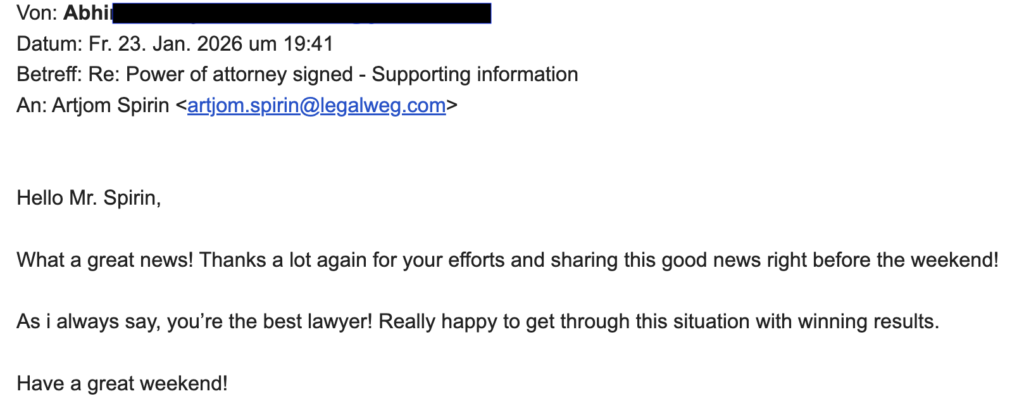
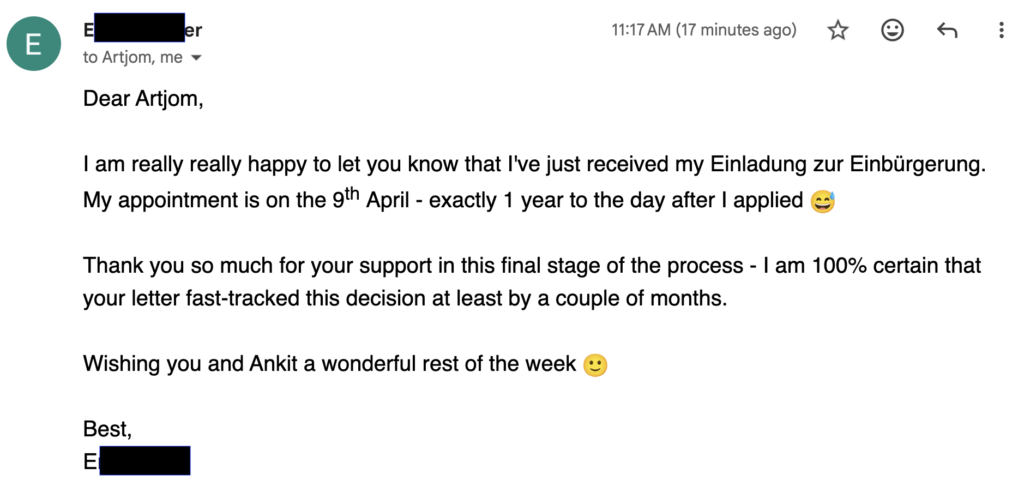
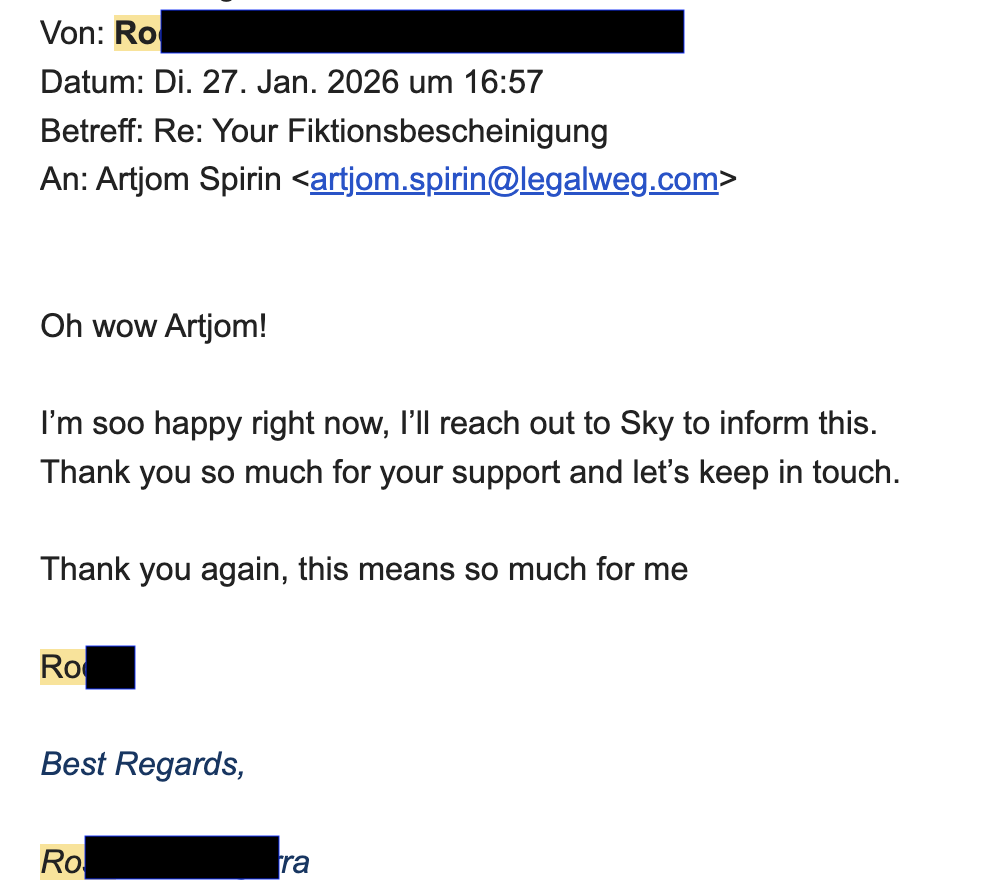
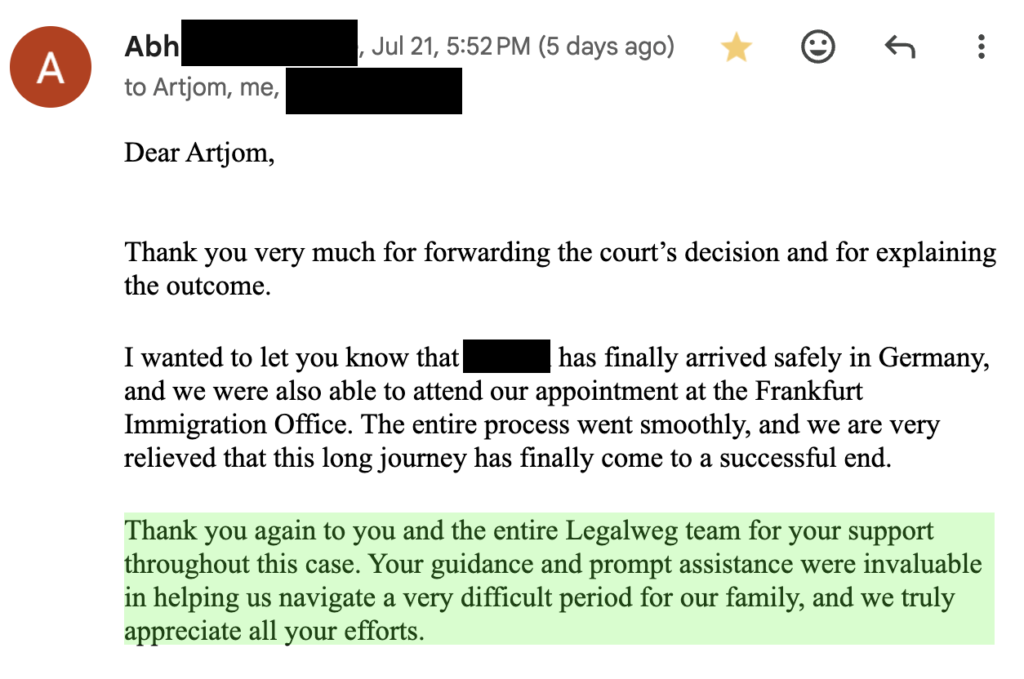
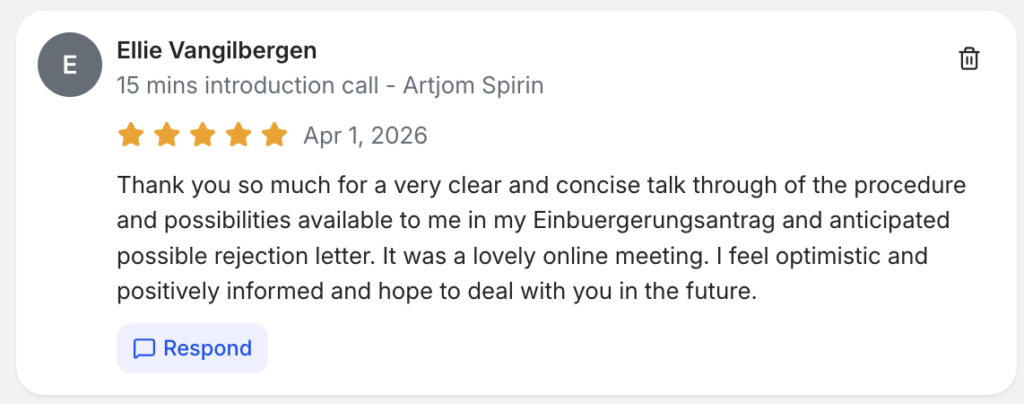
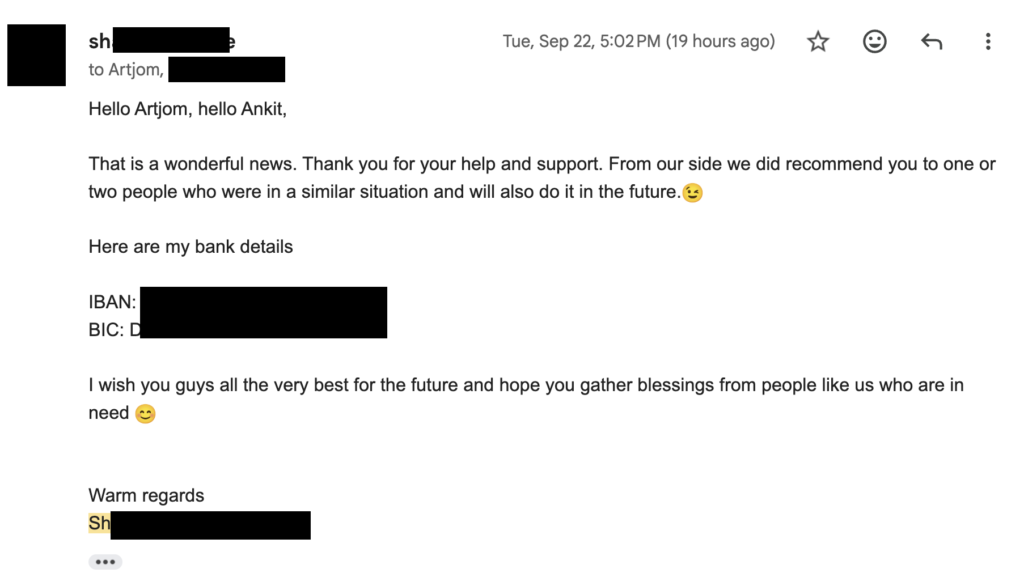
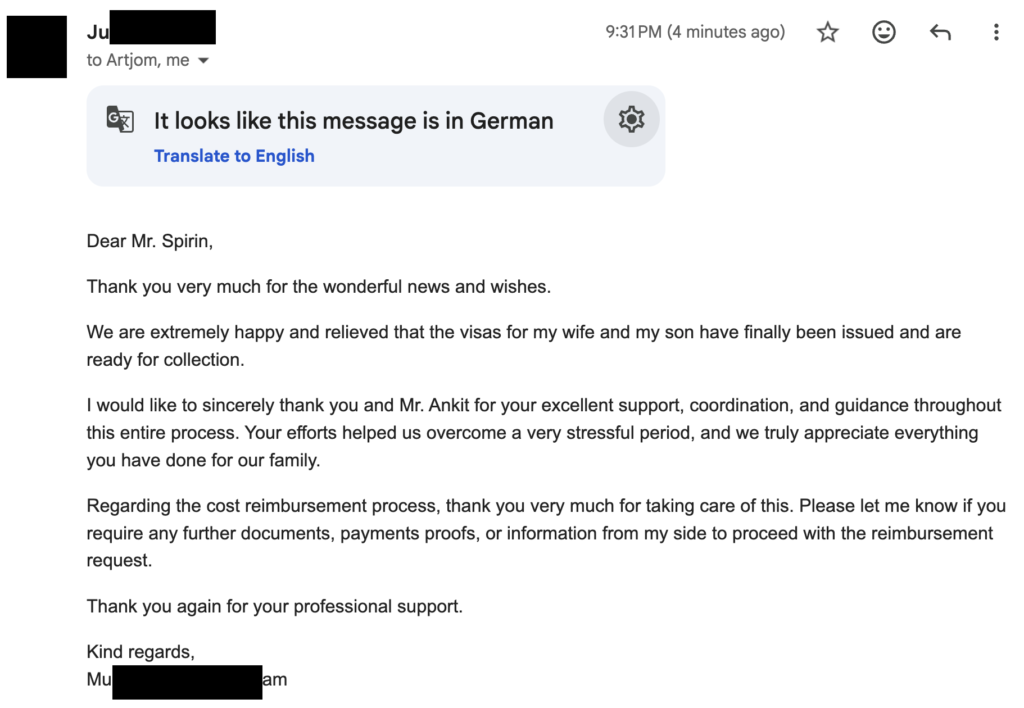
What Our Clients Say
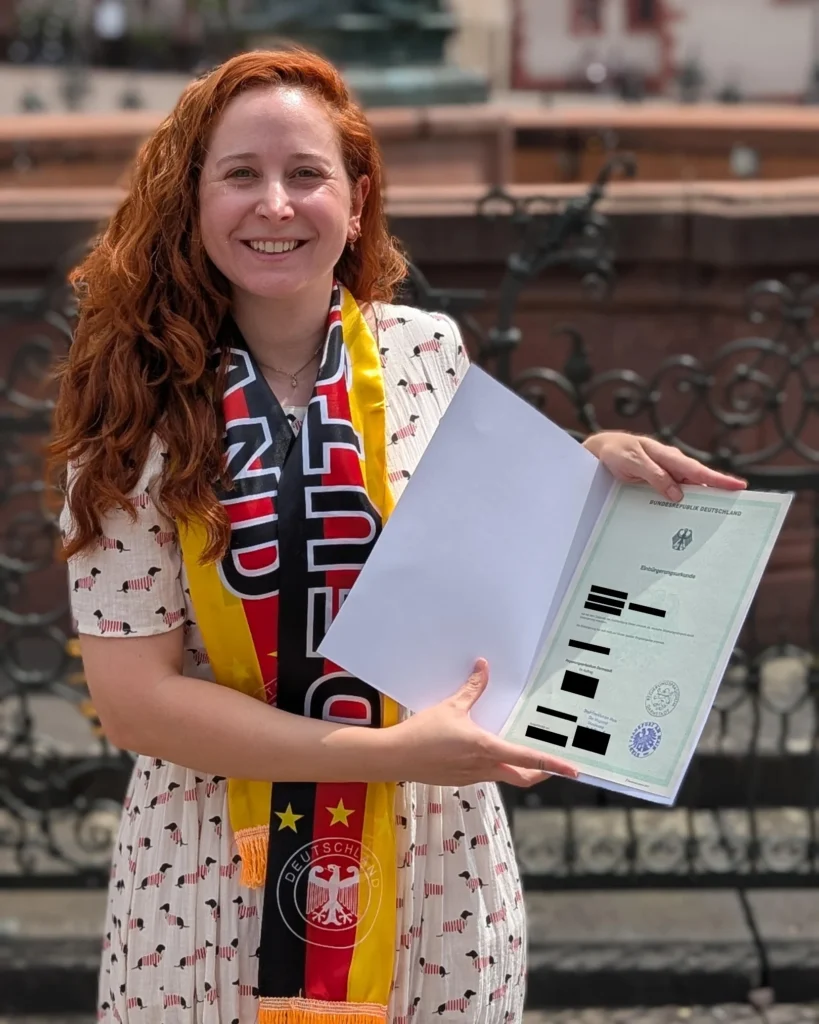
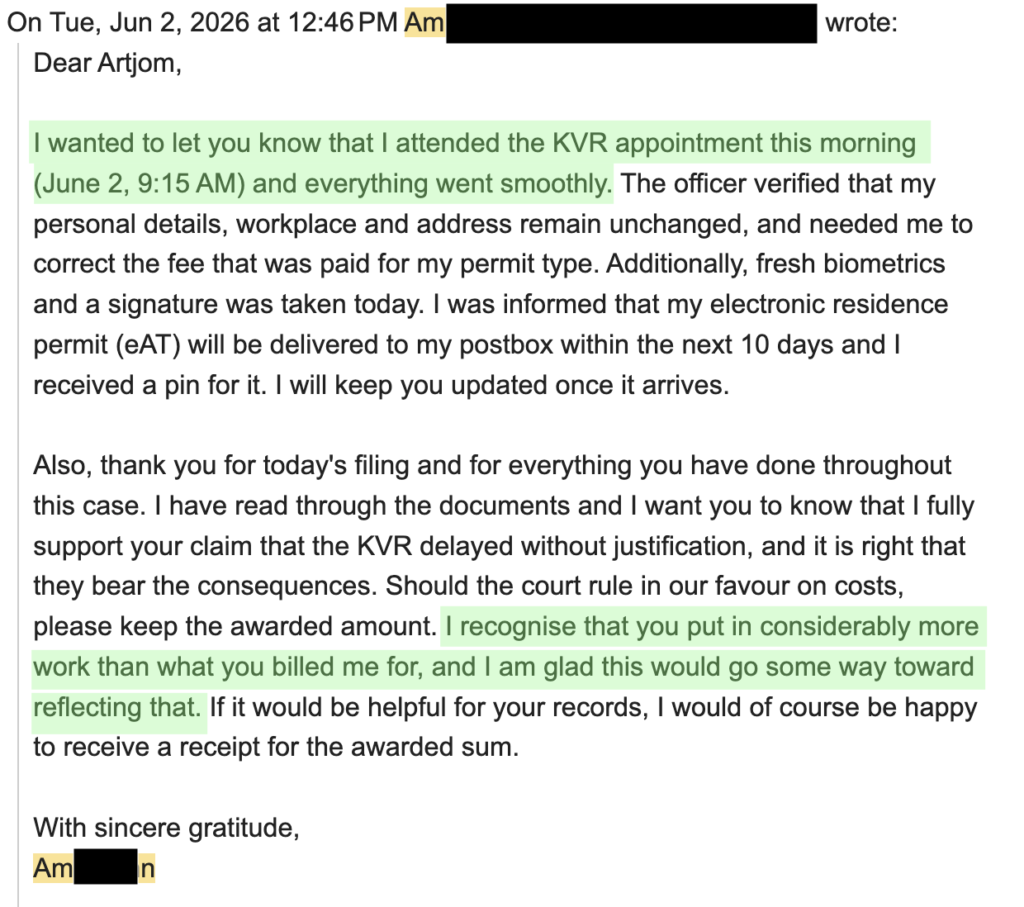
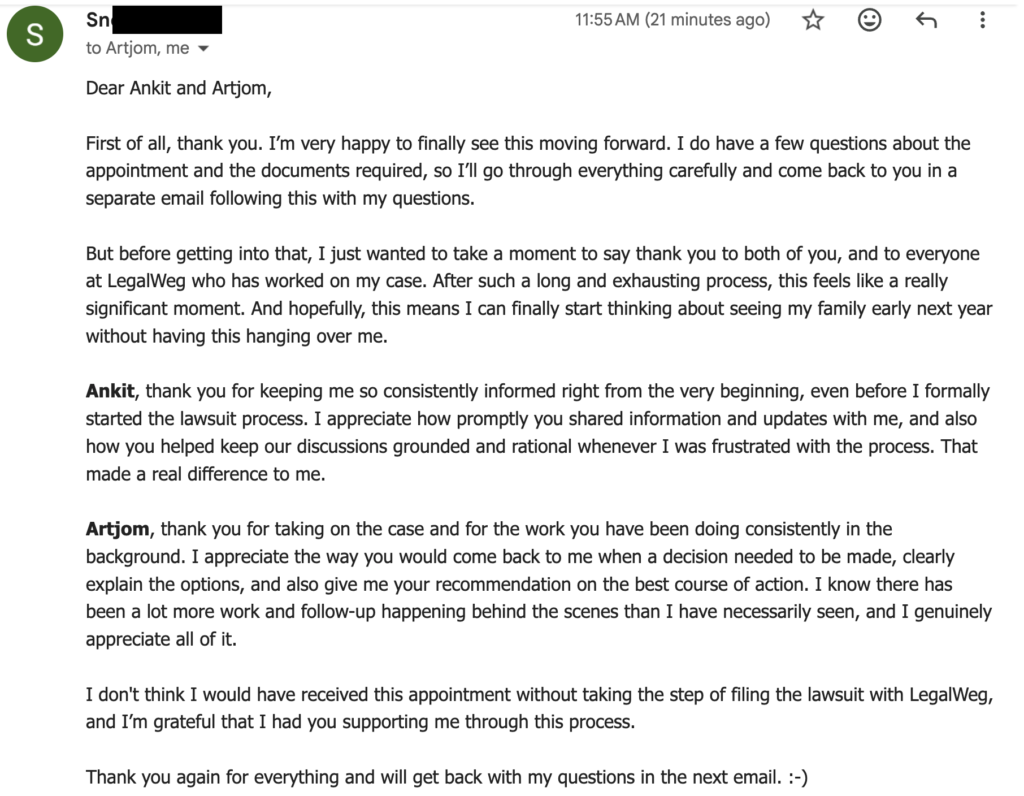
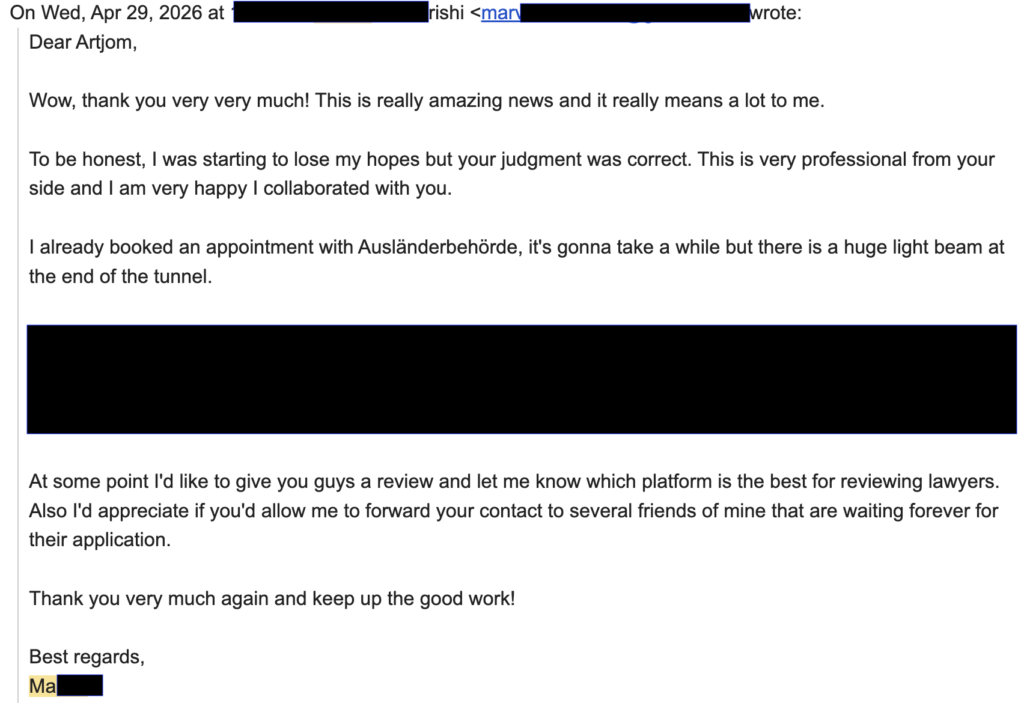

Don't Put Your Future on Hold
German Citizenship explained
What is German citizenship?
German citizenship makes you a member of the German state in law. It goes further than a permanent residence permit, which lets you stay in Germany with no end date but gives you no vote and no German passport.
The Nationality Act (Staatsangehörigkeitsgesetz, StAG) sets out the routes to German citizenship, including naturalization, marriage, birth, descent, declaration, and adoption.
Other special routes exist, such as for ethnic German resettlers (§ 7 StAG) and for people whom German authorities treated as Germans for 12 years through no fault of their own, shown for example by a citizenship certificate, passport or ID card (§ 3(2) StAG). We check these in the free case review too.
Who qualifies for German citizenship by naturalization?
You qualify for German citizenship by naturalization if you meet the conditions under § 10 StAG:
- Identity and nationality. Your identity and nationality are established.
- Years of residence. You have lived in Germany lawfully and habitually for 5 years. Spouses of Germans need 3 years and 2 years of marriage.
- Residence right. You hold a permanent right of residence, an EU Blue Card, or a permit for a purpose the law does not exclude. Permits for study and vocational training are excluded.
- Livelihood. You support yourself and your dependents without welfare benefits. Exceptions cover full-time workers (at least 20 of the last 24 months) and some others.
- German and civics. You show B1 German and pass the naturalization test. Illness, disability or age can waive both (§ 10(4) to (6) StAG).
- Record and commitment. You have no conviction for an unlawful act, with limited exceptions, and you commit to the free democratic order and Germany’s historical responsibility (§ 10(1) no. 1, 1a, 5 StAG).
The former three-year route for exceptional integration with C1 German no longer exists. § 10(3) StAG has been repealed, so naturalization under § 10 follows the five-year rule. As of Oct 2026.
What can block your naturalization for German citizenship?
The authority must refuse naturalization in these cases (§ 11 StAG):
- Concrete signs of anti-constitutional activity, unless you have distanced yourself from it.
- A false statement in your declaration under § 10.
- A particularly serious interest in expelling you.
- More than one spouse at the same time.
- Conduct that shows you do not respect gender equality under the Basic Law.
Antisemitic, racist and other acts that violate human dignity do not fit with the commitment to the constitution that § 10 requires (§ 10(1) StAG). We check these grounds before you file, so you do not pay for an application that cannot succeed.
How much does naturalization for German citizenship cost?
Who Applies | Fee |
|---|---|
Adult | €255 |
Minor naturalized together with a parent | €51 |
Minor naturalized alone | €255 |
If you earn very little, or several children are naturalized with you, the authority can reduce the fee or agree to instalments (BAMF).
The naturalization test and your language certificate cost extra. Legal fees come on top, and we inform you about our costs up front.
Fees as of Oct 2026.
How long does German citizenship by naturalization take?
German citizenship by naturalization has no single nationwide processing time. It depends on your authority, your route, and whether your documents are complete. Processing can take between 6 to 18 months or longer.
If you have waited longer than 12 months, we can help you push your German citizenship application forward.
What is discretionary naturalization in Germany?
The authority may naturalize you at its discretion under § 8 StAG if you meet these conditions:
- Live in Germany lawfully
- Have legal capacity
- Have no conviction for an unlawful act
- Have your own housing and can support yourself and your dependents (§ 8(1) StAG).
The authority decides each case on its own facts, so you have no automatic claim.
Frequently Asked Questions
Which route to German citizenship fits me best?
The route to German citizenship that fits you depends on your family ties, your years of residence, and your documents. The main routes are naturalization, marriage, birth, descent, declaration, and adoption.
More than one citizenship route can apply to you, so we check all of them in your free case review and advise you on the best route to take.
Can my family become German citizens with me?
Yes, your spouse and minor children can be naturalized together with you, even if they have not lived in Germany for five years (§ 10(2) StAG).
Can you lose German citizenship after naturalization?
Yes, you can lose German citizenship after naturalization, but only in limited cases.
- The authority can withdraw a naturalization that was obtained unlawfully (§ 35 StAG).
- Voluntarily joining a foreign state’s armed forces without consent, or actively fighting for a terrorist organization abroad, causes loss of citizenship, unless it would leave you stateless (§ 28 StAG).
What is an Untätigkeitsklage?
An Untätigkeitsklage (“action for failure to act”) is a lawsuit you file at the administrative court (Verwaltungsgericht) when an authority sits on your application without deciding it. It doesn’t ask the court to grant you the permit directly — it asks the court to make the authority finally do its job.
In immigration cases, the authority is usually the Ausländerbehörde, but it can also be the Bundesverwaltungsamt (citizenship), a Standesamt, or a German embassy.
When can I file an Untätigkeitsklage?
You can generally file an Untätigkeitsklage once three months have passed since you applied and the authority has not decided, without a good reason for the delay (§ 75 VwGO).
- A shorter wait is possible if special circumstances in your case call for it. § 75 gives no examples, so we can help assess this for you.
- If the authority has a good reason for the delay, the court pauses the case until a date it sets.
What can the court actually order?
Depending on your case, the court can:
- Require the authority to decide on your application.
- Order the authority to naturalize you, if you clearly meet the requirements and the law leaves it no discretion.
A court cannot guarantee a positive decision if you don’t meet the requirements. If your application is weak, forcing a decision can produce a faster rejection. We tell you that before you spend money.
What is the difference between Untätigkeitsklage and einstweiliger Rechtsschutz?
An Untätigkeitsklage is the standard route: it resolves the delay properly and takes weeks to months.
Einstweiliger Rechtsschutz (provisional injunctive relief) is the emergency route, used when waiting itself will cause you irreversible harm. For example, you’re about to lose a job offer that requires German citizenship, or your residence permit is expiring while your naturalization is pending. It’s much faster, but the court has to accept that your situation is genuinely urgent.
The two are not mutually exclusive, and in the right case, filing both applies real pressure. Which route fits you is a strategic decision. We explain which strategy makes sense in your situation at the start.
Will filing a lawsuit make the Ausländerbehörde treat me badly?
No. This is the fear we hear most often, and it isn’t how the system works. Officials are bound by law, not by mood, and processing your application faster is exactly what the court obliges them to do. A decision on your application has to be made on the legal requirements alone.
Filing a claim is a normal, routine legal step in Germany.
Do you handle both the letter and, if needed, the lawsuit?
Yes, we offer complete service at a flat rate.
Based on your case, we try to resolve it out of court, file a lawsuit, or move forward with provisional injunction relief. We stay with you until you hold proof of your German citizenship.
Even after you receive your certificate, you can reach us if you have any issues, questions, or concerns.
Which cases do you handle?
Any delay in a German immigration matter, including:
- German citizenship (Einbürgerung)
- Permanent residence (Niederlassungserlaubnis, Daueraufenthalt-EU)
- Blue Card and work permits
- Family reunification and spouse visas
- Residence permit extensions and change of purpose
- Settlement of EU/EEA family members
- Delayed appointments and unanswered Widerspruch
If you’re not sure your situation fits, ask. The assessment is free either way.
Do I have to appear in court?
Usually not. So far, we haven’t seen a case where a court hearing is scheduled.
Most delay cases are resolved in writing or end once the authority decides. Personal attendance is rarely required.
What does winning the lawsuit mean?
Winning a delay lawsuit means the authority makes a decision on your application. The decision can be in your favor or against you.
Once the authority decides, the case ends. If you could expect a decision before you filed, the authority bears the costs (§ 161(3) VwGO). We then request reimbursement on your behalf.
Does my legal insurance cover the cost of the lawsuit?
Whether your legal insurance covers a lawsuit against the authority depends on your policy.
Some legal insurance plans in Germany include administrative law cases, which can cover a lawsuit over a delayed naturalization.
Contact your insurer to confirm whether it covers the costs of an Untätigkeitsklage.
Will taking legal action make the Ausländerbehörde slow things down further?
No. The authority has to decide on your application whether or not you take legal action. A delay lawsuit exists for the case where the authority has not decided within a reasonable time (§ 75 VwGO). The authority decides on whether you meet the requirements of your route, not on whether you went to court.
Do I get the legal fees back after winning the lawsuit?
In Germany, if you win a lawsuit, the opposing party (in this case, the authority) typically covers your legal fees, including court and lawyer costs. However, the specifics can depend on the individual case and ruling.
It’s always best to confirm with your lawyer for details specific to your situation.